AI Patient Reactivation for Med Spas (30-Day)
If your med spa is busy but your schedule still has gaps, you may not have a lead problem.
You may have a reactivation problem.
Most practices have hundreds (or thousands) of past patients who:
loved the results,
planned to “come back soon,” and
quietly disappeared after 6–12 months.
At the same time, missed appointments are common in outpatient care: Kyruus Health reports that the average patient no-show rate in outpatient settings ranges from 23% to 33% (Kyruus Health).
No-shows and long gaps in care create a predictable pattern: patients drift, then they defect.
This guide shows a practical 30-day workflow to reactivate dormant med spa patients using AI,so your team can book more appointments from your existing database without adding headcount.
Primary keyword: AI patient reactivation med spa
Quick CTA: Want to automate reactivation (SMS + calls + follow-ups) and reduce the manual work on your front desk? Book a demo: https://www.mentera.ai/demo
What is “patient reactivation” (in plain English)?
Patient reactivation is the process of identifying patients who haven’t booked in a while and proactively reaching out,usually by text, email, and phone,to get them back on the schedule.
In a med spa, “dormant” often includes patients who:
haven’t been in for 6–18 months,
started a treatment plan but didn’t finish it,
missed an appointment and never rescheduled,
used an intro offer once and never returned.
Reactivation is different from acquisition:
Acquisition tries to convince strangers to trust you.
Reactivation reminds people who already know you why they came in the first place.
Why med spas lose “good patients” (even when your service is great)
Most dormant patients didn’t leave because they hated your practice.
They left because of one of these:
1) No-shows lead to churn
No-shows create a break in the relationship.
And the data shows missed appointments are common enough to be an operational issue, not an occasional annoyance.
Kyruus Health reports the average patient no-show rate in outpatient settings ranges from 23% to 33% (Kyruus Health).
2) Long lead times increase no-shows
The longer the time between “I’m ready” and “I can get in,” the more likely patients are to disappear.
A systematic review of open-access scheduling in outpatient clinics summarizes evidence that longer appointment lead times correlate with higher no-show rates, and it includes examples where missed appointments dropped significantly after scheduling changes (for example, one study reported missed appointments dropping from 18% to 11%) (Health Science Reports (PMC)).
3) Your front desk is doing too many jobs at once
In most med spas, the same team is juggling:
phone calls
texts
confirmations
reschedules
financing questions
intake paperwork
reviews
rebooking at checkout
Reactivation ends up at the bottom of the list because it isn’t urgent.
Until it is.
The ROI math: why reactivation is often your fastest growth lever
A full schedule can be built two ways:
Spend more on ads and promos.
Fill your pipeline with people who already trust you.
Reactivation wins when:
CAC is rising in your market.
You have staff limits.
You already have a database.
Even a modest reactivation lift can matter because it turns “sunk cost” (past marketing spend) into booked revenue.
If you’re not sure where to start, use this rule of thumb:
If you have more than 500 past patients and less than 70% of your weekly capacity booked from repeat patients, reactivation should be a core operating system,not a one-off campaign.
What “AI patient reactivation” actually means (and what it does not)
Let’s make this concrete.
AI patient reactivation is not a random chatbot blasting messages.
It is a workflow that:
finds the right patients,
chooses the best message and timing,
follows up persistently (without being spammy),
routes hot replies to your team,
documents what happened.
The goal is simple: more booked appointments with less manual effort.
Mentera is designed as an AI layer that sits on top of your existing tools (scheduling, phone, forms, payments),so you don’t have to replace your system to get automation.
The 30-day patient reactivation playbook (built for med spas)
This is a practical workflow you can run every month.
Week 0 (Prep): Set your definitions and lists
Before you send anything, decide:
1) What counts as dormant?
Tier 1: 6–12 months since last visit
Tier 2: 12–24 months
Tier 3: 24+ months
2) Who should you exclude?
patients who asked not to be contacted
patients with unresolved billing disputes
patients with open clinical concerns (route these differently)
3) What is your “offer” (if any)?
Not every campaign needs a discount.
Strong alternatives:
“We have new appointment times available”
“We added a new provider / new device”
“It’s time for your maintenance visit”
“We can hold a spot this week”
Week 1 (Days 1–7): Start with SMS-first, low-friction messages
SMS usually wins for speed.
Message template (Tier 1, warm + assumptive):
Hi {FirstName} , it’s {PracticeName}. We have a few openings this week and wanted to see if you’d like to come in for your next {ServiceType} / maintenance visit. Want me to send times?
Key rules:
Ask a question.
Make replying easy.
Do not overload the message with links.
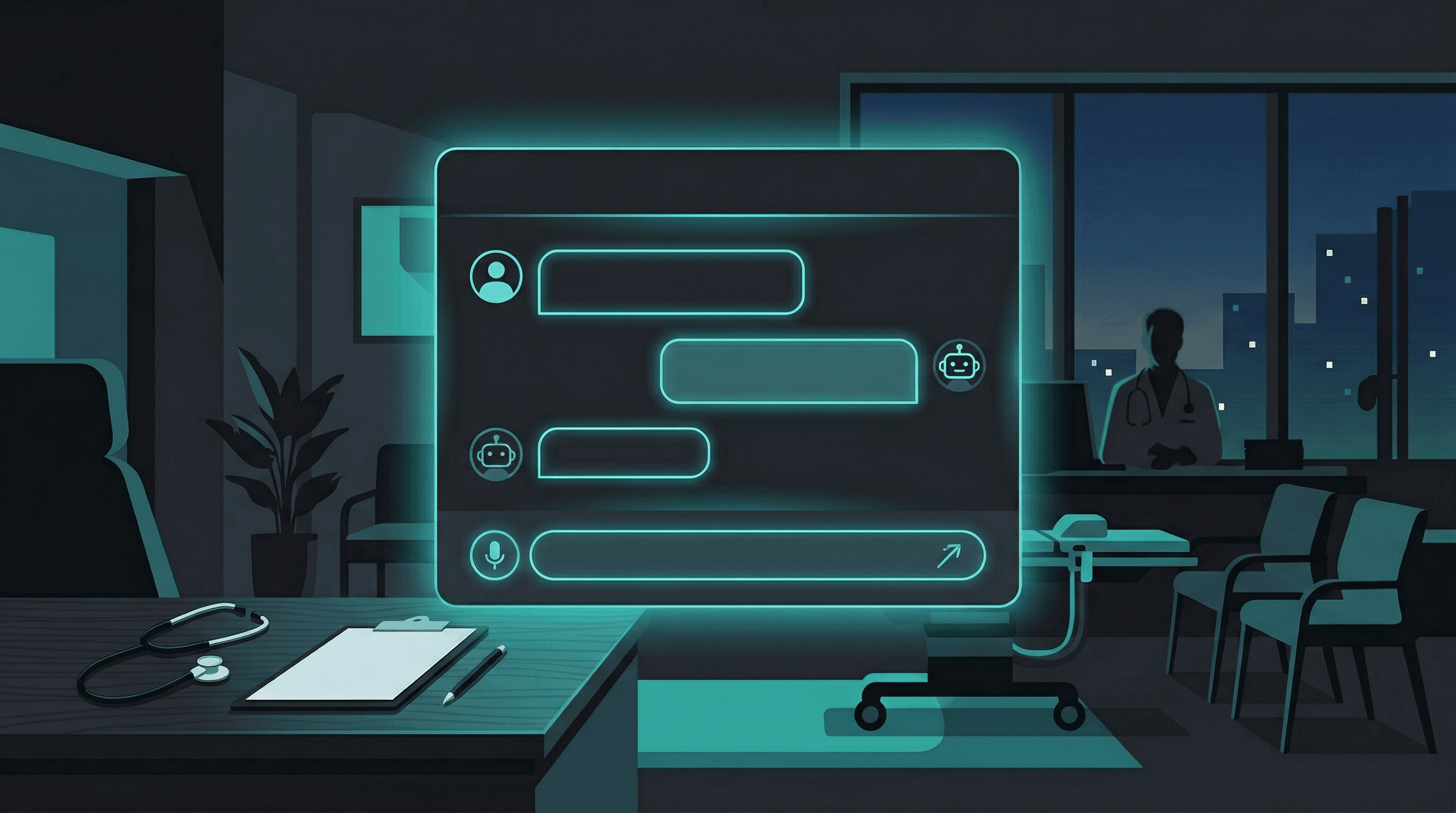
AI assist: An AI receptionist can handle replies like:
“How much is it?”
“Do you have Saturday?”
“Can I do Botox and filler same day?”
“I need to reschedule.”
…and then hand off to staff only when needed.
Week 2 (Days 8–14): Follow up by phone only when the signal is strong
Your staff’s time is expensive.
Use calls for:
high-LTV patients
patients who replied but didn’t book
patients with complex questions
Call script opener:
Hi {FirstName}, this is {Name} from {Practice}. We noticed it’s been a bit since we’ve seen you and wanted to help you get back on track,are you open to coming in sometime in the next two weeks?
AI assist: Use AI to generate call notes and update tags so you don’t lose the outcome.
Week 3 (Days 15–21): Add email for context + education
Email is useful for:
before/after education
FAQs about injectables
reminders about maintenance intervals
Email structure:
1 sentence personal opener
3 bullets on “what’s new” or “why maintenance matters”
clear CTA: book / reply
Week 4 (Days 22–30): Last-touch + recycle the non-responders
Your last touch should be respectful, not desperate.
SMS last-touch template:
Quick check-in, {FirstName} , should we keep reaching out about openings, or would you prefer we pause messages for now?
Then:
If they say “pause,” mark the preference.
If no response, recycle them into the next month’s Tier-appropriate list.
The workflow that makes reactivation work (systems, not willpower)
Most med spas fail at reactivation because it lives in someone’s head.
To make it repeatable, build a simple pipeline.
1) One place where “dormant” is defined
Even if you use multiple tools (Zenoti, Pabau, Boulevard, Nextech, ModMed, etc.), you need a consistent rule.
Examples:
“No visit in 9 months”
“No appointment booked after a no-show within 14 days”
2) A single inbox for replies (with routing)
If patient replies land in five places (texts, DMs, voicemail, email), follow-up breaks.
AI can triage:
urgent clinical questions → staff
pricing and scheduling → automated
angry messages → escalation
3) Documentation that updates automatically
If your team has to manually log every touch, the program dies.
An AI scribe / automation layer should update:
contact attempts
outcomes
tags (e.g., “wants Saturdays,” “financing questions,” “prefers SMS”)
What to automate vs. what should stay human
Automation is not the goal.
Booked appointments and retained patients are the goal.
Great candidates for automation
“Do you have openings?”
reschedules
reminders
intake links
insurance / financing routing
post-visit check-ins
Better handled by humans
complicated dissatisfaction
refunds and disputes
clinical edge cases
VIP outreach
A strong system uses AI for the volume and humans for the moments that matter.
Common mistakes that kill reactivation (and how to avoid them)
Mistake 1: Treating reactivation like a one-time promotion
If you run reactivation once a year, you’ll get a spike, then nothing.
Make it a monthly operating rhythm.
Mistake 2: Messaging everyone the same way
A 7-month dormant patient is not a 3-year dormant patient.
Segment by:
time since last visit
service type
value tier
last appointment outcome
Mistake 3: No response handling
If someone replies “How much?” and nobody answers for 8 hours, the opportunity is gone.
This is exactly where an AI receptionist helps: always-on answers, then handoff.
Mistake 4: No measurement
Track:
contact rate
response rate
booked rate
show rate
revenue per reactivated patient (estimate is fine)
How Mentera helps (without replacing your current software)
Mentera is not an EHR.
It is an AI layer that sits on top of your existing practice tools to:
search across your systems (so your team can find answers fast),
handle patient conversations (AI Receptionist),
automate follow-up workflows (including reactivation),
reduce administrative load so staff can focus on patient experience.
If you want a system that runs reactivation every month,without adding work,Mentera can help.
Book a demo: https://www.mentera.ai/demo
FAQ: AI patient reactivation for med spas
How soon should a med spa start reactivation?
Start as early as 6 months after the last visit for many services, especially maintenance-based treatments.
What channels work best?
SMS is typically the fastest for responses, but a winning program uses SMS + phone + email with clear routing.
How often should we contact dormant patients?
A monthly rhythm is usually sustainable. Within a 30-day cycle, plan for 3–6 touches depending on the dormancy tier.
Will patients get annoyed?
They will if messages feel generic or too frequent. Segment your list, make it easy to opt out, and prioritize helpful reminders over hype.
Can AI replace my front desk?
AI can handle a large portion of routine questions and scheduling steps, but it should support your team,not eliminate the human experience that makes a med spa feel premium.
Do I need to switch my scheduling or EHR?
No. Mentera is designed to sit on top of your existing tools, so you can add automation without replacing your current stack.
Next step
If you want to turn dormant patients into booked appointments with an always-on reactivation workflow, schedule a Mentera demo:
https://www.mentera.ai/demo