ChatGPT for Medical Practices: What It Can Do
230 million people ask ChatGPT health questions every week. If you run a dental practice, veterinary clinic, or med spa, you've probably tried it yourself, drafting patient emails, writing social media posts, maybe even asking it to help with a treatment plan. ChatGPT is genuinely useful for those things. But running a medical practice takes more than a chatbot, and the gap between "helpful AI tool" and "AI built for your practice" is bigger than most people realize. Here's what actually works, what doesn't, and what to look for instead.
What ChatGPT Does Well for Medical Practices
Give credit where it's due. ChatGPT is a strong general-purpose tool, and plenty of practice owners are getting real value from it right now.
Content and marketing. Need a blog post about teeth whitening aftercare? A social media caption for your med spa's new laser treatment? An email newsletter for your veterinary clients about flea season? ChatGPT handles this quickly. It won't know your brand voice perfectly out of the box, but with a few prompts, it gets close enough to save hours every week.
Administrative drafts. Office policies, consent forms, patient intake questionnaires, staff training documents, ChatGPT can draft all of these. One dentist we spoke with uses it to write insurance appeal narratives, cutting what used to be a 45-minute task down to 10 minutes.
Patient communication templates. Appointment reminders, follow-up instructions, FAQ responses, ChatGPT generates solid first drafts. A veterinary practice in Texas uses it to simplify complex diagnoses for pet owners, turning medical jargon into plain-language explanations.
Research and brainstorming. Exploring a new service line? Considering a new piece of equipment? ChatGPT is a fast way to get a starting point for research. It won't replace a proper clinical evaluation, but it can help you frame the right questions.
Where ChatGPT Falls Short for Medical Practices
Here's where it gets real. ChatGPT wasn't built for healthcare operations, and the limitations show up fast once you try to use it for anything beyond content drafts.
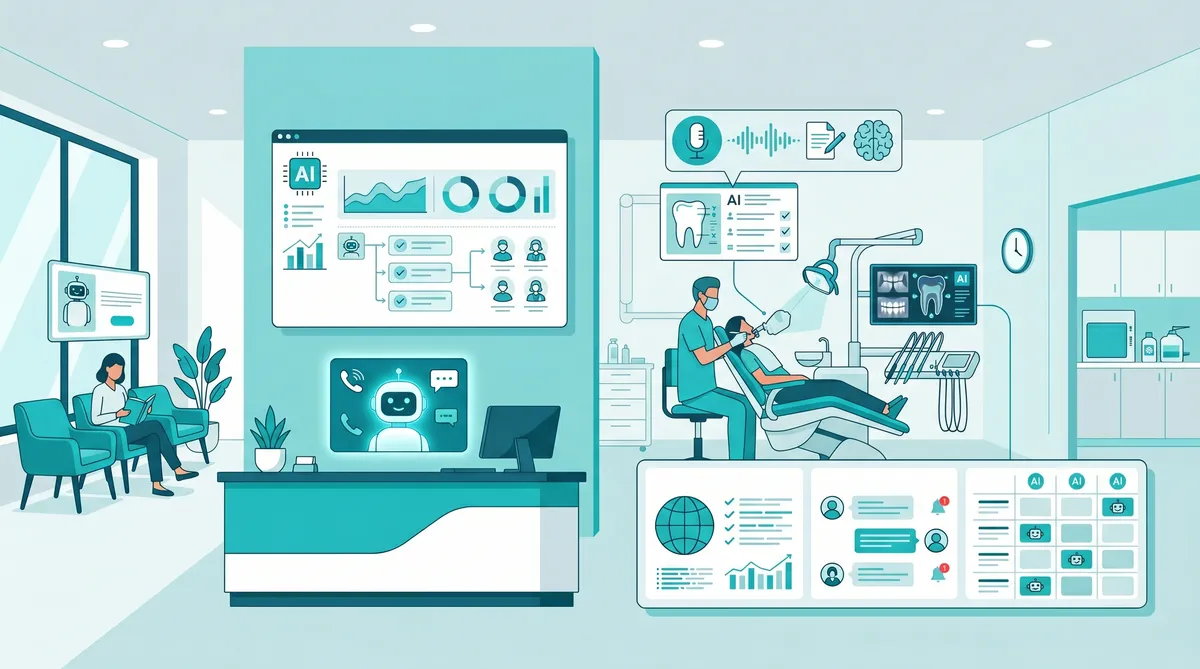
It doesn't connect to your EHR. ChatGPT can't pull up a patient chart, read your schedule, or update a record. Every time you use it, you're copying and pasting information back and forth between systems. For a busy practice seeing 20-40 patients a day, that friction adds up quickly. Compare that to an AI tool built for medical practices, like Mentera's AI Scribe, which integrates directly with your EHR and writes notes in real time.
It's not HIPAA compliant. This is the big one. When you paste patient information into ChatGPT, that data is not protected by HIPAA. OpenAI's enterprise products are moving toward compliance, but the standard ChatGPT product that most practice owners use? No BAA (Business Associate Agreement), no audit trail, no guarantees about how your data is stored or used. For dentists, vets, and med spas handling protected health information, this is a real risk, not a theoretical one.
It doesn't know your patients. ChatGPT starts every conversation from scratch. It doesn't know that Mrs. Johnson prefers morning appointments, that Dr. Patel's golden retriever has a history of allergies, or that your med spa client is on their third round of microneedling. Purpose-built practice management AI maintains patient context across interactions, which is what makes automation actually useful rather than just fast.
It can't take action in your systems. ChatGPT can tell you how to reduce no-shows. But it can't actually send the reminder, reschedule the appointment, or follow up with the patient who missed. That requires AI that's wired into your scheduling system, your patient communication platform, and your billing workflow. Telling you what to do and doing it for you are fundamentally different capabilities.
It hallucinates. ChatGPT sometimes generates medical information that sounds authoritative but is wrong. In a marketing draft, that's annoying. In a clinical note or patient communication, it's dangerous. Purpose-built medical AI tools are trained with clinical guardrails that general chatbots don't have.
What Dentists Actually Need from AI
Dental practices run on volume. The average general dentist sees 10-15 patients per day, and every minute spent on paperwork is a minute not spent chairside. Here's where AI delivers the most value:
Clinical documentation. AI scribes that listen during procedures and generate notes in your preferred format (SOAP, narrative, whatever your state board requires) save 30-60 minutes per day. This is the single highest-ROI AI investment for most dental practices.
Insurance and billing. AI that drafts pre-authorization narratives, codes procedures accurately, and flags claim issues before submission directly impacts revenue. ChatGPT can draft a narrative, but it can't submit the claim or track the denial.
Patient recall. Automated outreach to patients overdue for cleanings, with personalized messaging based on their treatment history. Not a generic template, actual context-aware communication through your existing patient communication channels.
What Veterinary Practices Actually Need from AI
Vet practices face a unique challenge: high emotional stakes, complex multi-species medicine, and clients who Google symptoms before they call. AI can help on all three fronts.
SOAP notes across species. A tool that understands the difference between documenting a feline dental extraction and a canine cruciate repair, and formats the note correctly for your practice management system, is dramatically more useful than asking ChatGPT to "write a vet note."
Client communication. Translating "your cat has diabetic ketoacidosis" into something a worried pet owner can actually understand and act on. AI that knows the patient's history and the owner's communication preferences handles this better than a generic prompt.
Triage support. AI-powered intake that asks the right questions before the visit, so your techs aren't starting from zero when the patient walks in. This is especially valuable for emergency and urgent care clinics where time matters.
What Med Spas Actually Need from AI
Med spas operate at the intersection of healthcare and hospitality. The AI needs are different from a traditional medical practice.
Consultation support. AI that helps aestheticians and injectors document consultations, track treatment plans across visits, and generate before/after summaries. The continuity of care matters, clients come back every 4-6 weeks, and remembering their preferences and treatment history is what separates a good med spa from a great one.
Revenue optimization. AI that analyzes your booking patterns, identifies gaps in the schedule, and recommends targeted outreach to fill them. ChatGPT can't see your calendar. A practice management AI can.
Marketing with compliance. Med spa marketing walks a fine line, you need compelling content that doesn't make claims your medical director wouldn't approve. AI built for med spas understands those guardrails. ChatGPT doesn't know what your state medical board considers an unsubstantiated claim.
What to Look for in AI Built for Medical Practices
If you're evaluating AI tools beyond ChatGPT, here's the checklist that matters:
EHR integration. Does it connect to your existing systems, or does it create another silo? The best tools plug into your EHR, your scheduling platform, and your patient communication stack. Mentera integrates with major EHR systems so your AI works where your team already works.
HIPAA compliance with a signed BAA. Non-negotiable. If the vendor won't sign a Business Associate Agreement, walk away. This protects you if there's ever a data breach or audit.
Specialty awareness. AI that knows the difference between a dental practice, a veterinary clinic, and a med spa will generate better notes, better communications, and better recommendations than a general-purpose tool trained on everything.
Workflow automation, not just text generation. The real value isn't AI that writes things. It's AI that does things, sends reminders, updates records, flags overdue patients, routes messages. Text generation is table stakes. Workflow automation is the game changer.
Transparent pricing. Healthcare AI should charge per-provider or per-location, not per-query. You shouldn't have to worry about your bill going up because your practice had a busy month.
The Bottom Line
ChatGPT is a useful tool. Use it for marketing drafts, brainstorming, and quick research. It's genuinely good at those things, and it's free (or cheap).
But for the work that actually runs your practice, documentation, patient communication, scheduling, billing, compliance, you need AI that was built for medical practices. Not adapted from a consumer chatbot, but designed from the ground up for how dentists, vets, and med spas actually operate.
The practices that figure this out in 2026 will run leaner, see more patients, and spend less time on admin. The ones that try to duct-tape ChatGPT into their workflow will get some value, but they'll hit the ceiling fast.
Ready to see what AI built for your practice looks like? Book a demo at mentera.ai and we'll show you the difference in 15 minutes.
FAQ (for FAQPage schema)
Can I use ChatGPT in my medical practice? Yes, ChatGPT is useful for marketing content, administrative drafts, and research. However, it's not HIPAA compliant, doesn't connect to your EHR, and can't take actions in your practice management systems. For clinical documentation and patient communication, you need purpose-built medical AI.
Is ChatGPT HIPAA compliant? The standard ChatGPT product is not HIPAA compliant. OpenAI does not sign Business Associate Agreements for consumer ChatGPT accounts. If you're handling protected health information, you need a HIPAA-compliant AI solution with a signed BAA.
What's the best AI tool for dental practices? The best AI for dental practices integrates with your EHR, automates clinical documentation (SOAP notes, procedure notes), handles insurance narratives, and manages patient recall. Look for tools with dental-specific templates and HIPAA compliance. Mentera offers AI scribe and practice automation built specifically for dental workflows.
Can veterinary practices use ChatGPT? Veterinary practices use ChatGPT for marketing, client communication drafts, and research. For clinical workflows like SOAP notes, client education, and triage support, purpose-built veterinary AI tools provide better accuracy and integration with practice management systems.
What AI tools do med spas use? Med spas typically use AI for consultation documentation, treatment plan tracking, appointment scheduling, patient communication, and marketing. The most effective tools integrate with med spa management platforms and understand aesthetic treatment workflows. Popular options include Mentera, Zenoti, and Mangomint.
How much does AI cost for a medical practice? AI tools for medical practices typically range from $99 to $500 per provider per month, depending on features. ChatGPT Plus costs $20/month but lacks healthcare-specific functionality. Purpose-built medical AI costs more but delivers significantly higher ROI through time savings, reduced errors, and better patient communication.
Will ChatGPT replace medical staff? No. AI tools like ChatGPT handle repetitive tasks, drafting notes, writing emails, generating content, but they can't replace clinical judgment, patient empathy, or hands-on care. The best AI tools augment your team's capabilities rather than replacing team members.
What's the difference between ChatGPT and medical AI tools? ChatGPT is a general-purpose AI trained on public internet data. Medical AI tools are purpose-built for healthcare workflows, they integrate with EHRs, maintain HIPAA compliance, understand clinical terminology, and can take actions in your practice management systems. ChatGPT generates text; medical AI tools automate workflows.