AI Scribe for Aesthetics: Keep Your EHR (2026)
AI Scribe for Aesthetics: How to Document Injectables, Lasers, and Devices Without Changing Your EHR
Aesthetic medicine documentation is uniquely demanding. Every Botox session, every laser pass, every device cycle has to be recorded with the exact product, units, lot number, device settings, treatment areas, patient consents, and post-treatment instructions, and increasingly with photo documentation tied to the chart. For most injectors and laser providers, this work happens in stolen minutes between patients or, more often, after the clinic closes.
The promise of an AI scribe is to capture all of this in real time without slowing the visit. The skeptical question every med spa owner asks is whether that promise actually holds for aesthetics specifically, and whether the rollout requires swapping out the practice management system. The short answer is yes on the documentation lift, and no on the EHR swap, provided you choose the right architecture. This guide walks through what an AI scribe should capture for aesthetic visits, the evidence on documentation efficiency, the integration patterns that avoid an EHR migration, and a 30-day rollout that does not break your team.
What the evidence says about AI scribes in clinical practice
The 2025 and 2026 evidence base on ambient AI scribes is increasingly strong. A quality improvement study published in JAMA Network Open evaluated 46 clinicians in a Philadelphia outpatient academic health system and found that ambient scribe technology was associated with 20.4 percent less time in notes per appointment (10.3 minutes down to 8.2 minutes), same-day closure increasing from 66.2 percent to 72.4 percent, and after-hours work decreasing 30.0 percent (50.6 minutes down to 35.4 minutes per workday) (JAMA Network Open).
A second JAMA Network Open analysis of 263 clinicians found that after 30 days of ambient AI scribe use, clinician-reported burnout dropped from 51.9 percent to 38.8 percent, after-hours documentation decreased by an average of 0.90 hours, and note-related cognitive task load improved meaningfully (JAMA Network Open).
A larger-scale real-world evaluation by Providence drew on EHR metadata from July 2023 through March 2025 covering 16,149 observation-months and 1,547 active users, finding statistically significant reductions in in-clinic documentation time, sustained decreases in after-hours documentation, and a small but significant increase in RVUs without an increase in appointment volume (Providence).
The data is overwhelmingly from medical, not aesthetic, settings. But the underlying mechanism (ambient listening, structured extraction, EHR write-back) is the same. The aesthetic-specific question is whether the AI extracts what aesthetics actually requires.
What an aesthetic AI scribe needs to capture
A general medical AI scribe will produce a clean SOAP note. An aesthetic AI scribe needs to capture additional structured fields that matter for safety, compliance, and inventory. Specifically:
Product and lot. Brand and product name (Botox, Dysport, Xeomin, Daxxify, Juvederm, Restylane, RHA, Sculptra, Radiesse, Kybella), exact lot number, and expiration where required.
Units or volume. Total units injected per area for neuromodulators, volume in ml per area for fillers, energy levels and pass counts for lasers and devices.
Treatment map. Specific facial or body regions, ideally tied to a diagram or photo annotation.
Device settings. For laser and energy devices, the exact settings used (wavelength, fluence, pulse duration, spot size, cooling).
Consents and pre/post-care. Confirmation that the appropriate consents were signed before the procedure, and that post-treatment instructions were provided.
Photo references. Before and after photos tied to the encounter, ideally written back to the patient chart.
Adverse event flags. Any reaction, asymmetry, bruising, or complication noted during or immediately after the procedure.
A scribe that produces only a narrative note misses the structured fields. A scribe that captures all of the above as discrete data is what the practice actually needs.
The architecture: AI scribe as a layer, not a replacement
The most common reason aesthetic practices stall on AI scribe adoption is a fear that the implementation requires switching EHR or practice management software. This is a misconception that vendors with limited integration depth often fail to correct.
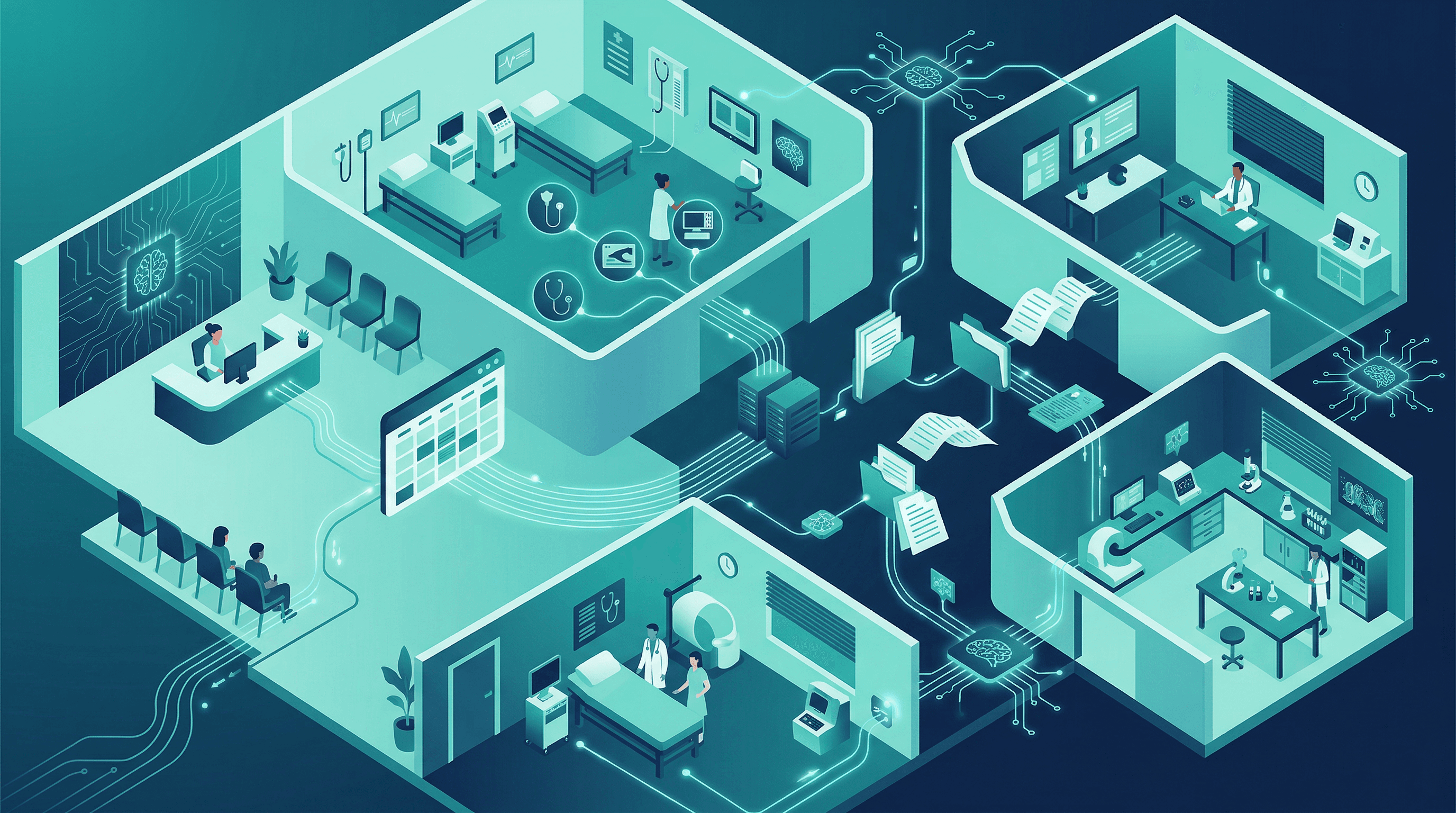
The right architecture is an AI scribe that sits on top of your existing EHR or practice management software. The scribe captures the encounter via ambient listening (with a microphone in the treatment room or a phone app the provider carries), processes the audio with structured extraction, and writes the resulting note plus structured data back into the existing chart. Nothing about the underlying chart system changes.
This architecture matters operationally for three reasons. First, EHR or PMS migration is a 6-to-12 month project that delays every downstream benefit. Second, your team is already trained on your current system, and retraining them is expensive. Third, structured data captured in the wrong place is worse than no data at all, because it creates a parallel system that diverges from the official chart.
Mentera's Scribe AI is built on this layer architecture. It captures the aesthetic encounter, extracts the structured fields that matter for aesthetics, and writes back into the existing chart system without forcing a migration. The same AI layer also covers AI Receptionist, AI Insurance Handler, AI Patient Reactivator, and AI Search across your existing tools, so the scribe lives inside a unified data layer rather than as a stand-alone tool.
The clinical and operational benefits in an aesthetics setting
When the scribe is well-architected and tuned for aesthetics, the benefits compound across three dimensions.
Clinical safety. Structured capture of products, lots, units, and device settings reduces the risk of dosing errors and creates a defensible audit trail. If a patient reports a complication weeks later, the chart contains the exact specifications of the treatment.
Provider time. The provider documents in real time, not after the patient leaves. Based on the medical-setting evidence, a meaningful share of after-hours documentation simply disappears. For an injector seeing 12 to 18 patients a day, the time savings can run to 45 to 90 minutes per shift.
Patient experience. When the provider is not typing, the consultation is more present, more consultative, and (in aesthetics) more conducive to upsell and retail attach. The data on consultation quality is harder to quantify, but the qualitative reports from aesthetic providers using ambient scribes are consistent: the room feels different.
The 30-day rollout plan
Most failed AI scribe deployments fail in the first 30 days. The pattern is consistent. The provider tries the scribe for two days, hits an edge case, gets frustrated, and abandons the system. The fix is a disciplined rollout that builds confidence before scaling.
Week 1: Shadow mode. The AI listens and generates draft notes, but the provider continues documenting their normal way. End of each day, compare the AI's draft against the provider's note. Identify gaps in structured field capture, especially for product, lot, units, areas, and device settings. Provide structured feedback to the vendor.
Week 2: Co-pilot mode. The provider edits and signs the AI's draft note for half of their visits. The other half continues with their normal workflow. The provider should still complete the day's documentation by end of shift to validate that the AI draft is actually saving time.
Week 3: AI-primary mode. All visits use the AI scribe. The provider reviews and signs each note before end of shift. Track three metrics: time spent reviewing notes, error rate (notes that required substantive edits), and after-hours documentation time.
Week 4: Scale and tune. Add the second provider. Configure structured field templates for the specific products and devices the practice uses. Build the photo workflow that ties before/after photos to the chart automatically. Set up the monthly review with the vendor.
Skipping shadow mode is the single biggest predictor of failure. The team needs to see the AI handle their actual encounters before trusting it.
Common objections and the honest answers
"My EHR does not allow third-party integrations."
Most aesthetic EHRs and practice management systems do support some form of integration, whether via direct APIs, HL7 interfaces, or middleware. Insist on a live demo on your specific software version before assuming integration is impossible. If a vendor cannot demo write-back on your system, that is a vendor problem, not a system problem.
"My team will not adopt it."
Adoption is a function of the rollout discipline, not the team. A clear 30-day plan with shadow mode, a single named operations owner, and a weekly review with the vendor closes the adoption gap. Practices that skip the rollout structure see 30 to 60 percent of providers abandon the scribe in the first month.
"AI is going to miss something clinically important."
This is a real risk and the right question to ask. The mitigation is the provider review step. The AI draft is never the final note. The provider signs the note, just as they sign their own notes today. The structured field extraction should be highlighted in the draft so the provider can verify quickly.
"It will slow me down."
This is the easiest concern to falsify with shadow mode. Run the AI for one week alongside your normal documentation. Measure note time before and after. If the AI does not save meaningful time, the implementation is wrong, not the technology.
"I do not want to be locked into a vendor."
Confirm that your scribe vendor exports your notes and structured data in standard formats and that the BAA includes a clear data portability clause. A scribe that captures clinical data without providing portability is a long-term liability.
Comparison: aesthetic AI scribe options at a glance
Capability | EHR-native scribe | Stand-alone AI scribe | AI layer with scribe module |
|---|---|---|---|
Aesthetics-specific field extraction (product, lot, units, areas, device settings) | Varies, often limited | Strong if marketed for aesthetics | Strong with practice tuning |
Write-back to your existing EHR | Locked to that EHR | Variable, often partial | Designed for it |
Photo capture and chart linking | Locked to that EHR | Some support | Yes, cross-tool linking |
Real-time vs after-the-fact | Real-time | Real-time | Real-time |
Pricing | Bundled with EHR | Per provider per month | Per practice across modules |
Adjacent AI (receptionist, insurance, reactivation) | Sometimes bundled | Separate vendors | Same vendor, unified data |
Risk if EHR changes | High | Low | Low |
Choose your path
Choose an EHR-native scribe if your EHR vendor offers a credible scribe module today, you are not planning to switch EHRs, and you have validated aesthetic-specific field capture in a live demo.
Choose a stand-alone AI scribe if your only operational problem is documentation, you have strong existing tools for everything else, and you have validated write-back on your specific EHR version.
Choose an AI layer with a scribe module if you want scribe plus AI receptionist, insurance handler, patient reactivation, and AI search from one vendor without replacing your EHR or practice management system.
Wait if you cannot articulate which documentation problem you are trying to solve. Buying a scribe without a target metric is the most common reason rollouts stall.
Frequently asked questions
Will an AI scribe replace my aesthetic EHR?
No. The right architecture is an AI scribe that sits on top of your existing EHR or practice management system and writes back into it. Your team continues using the chart system they are trained on. The scribe layer simply captures the encounter and populates the chart in real time.
Can an AI scribe capture injection units, filler volumes, and laser settings?
Yes, but only with a scribe that is configured for aesthetic-specific extraction. Generic medical scribes will capture narrative but miss the structured fields. Insist on a live demo of product, lot, units, areas, and device settings extraction before signing.
Is an AI scribe HIPAA compliant for an aesthetic practice?
Compliance depends on the vendor's contractual posture, not on the technology. Insist on a signed BAA, documented subprocessors, a clear data retention policy, and the ability to delete patient data on request. Compliance is verifiable, not a marketing claim.
How long until an AI scribe pays for itself in an aesthetic practice?
Based on the medical evidence base, the time savings typically range from 20 to 30 minutes per provider per day. For an injector seeing 15 patients a day, that translates into roughly 10 to 15 hours per month of reclaimed time, which usually pays for the scribe within the first month at typical vendor pricing.
Can my injector use the AI scribe in the treatment room without it being awkward?
The most common implementation pattern is a discreet microphone or a phone-based capture that the provider carries. With patient consent communicated up front, the awkwardness fades within the first few visits. The honest counter-pattern is that providers who try to hide the scribe or use it without patient awareness create more discomfort, not less.
What if my EHR vendor offers its own scribe?
Evaluate it on the same criteria you would use for any third-party scribe: aesthetic-specific extraction, write-back depth (which is automatically good since it is the same vendor), pricing, BAA posture, and 30-day rollout structure. If the EHR's scribe meets the bar, use it. If it does not capture the structured aesthetic fields you need, layer in a third-party scribe instead of switching EHRs.
Ready to add an AI scribe to your aesthetic practice?
If you want help evaluating whether an AI scribe fits on top of your existing EHR or practice management system, and what a 30-day rollout looks like for your specific provider mix, book a Mentera demo. The team will walk through your current documentation workflow, your products and devices, and your EHR, and give you an honest read on the highest-ROI place to start.