AI Chatbots for Med Spas and Dental (2026)
You missed 12 consultation requests last month because nobody answered after 6 PM. Those weren't tire-kickers. They were people Googling "Botox near me" at 9 PM or searching "emergency dentist open now" on a Saturday morning, credit card in hand, ready to book. They found your website, sent a message or tried to call, got nothing back, and booked with someone who did respond.
This is the single most expensive leak in a private practice. Not your ad spend. Not your reviews. The gap between when patients reach out and when someone at your front desk actually responds.
This guide is for med spa and dental practice owners who want an AI chatbot that books real patients, not just answers FAQs and looks pretty on your website. We'll walk through exactly what a good chatbot does (and what makes a bad one dangerous), show you playbooks for both med spas and dental clinics, give you real numbers from practices that have done this, and lay out the implementation steps so you can actually get one running.
No jargon. No "schedule a demo to learn more." Just the practical stuff that works.
The Problems You're Already Tired of Dealing With
If you spend any time in practice owner forums, you'll hear the same complaints over and over. Here's what we see from both med spa and dental clinic owners, in their own words.
Every Practice Owner's Pain List
Missed calls and after-hours messages. Your front desk closes at 5 or 6 PM. Your patients are browsing at 8 PM, 10 PM, Sunday morning. Studies show that responding to a lead within 5 minutes makes you 8x more likely to convert them. After 30 minutes, your odds crater. Most practices respond in 12 to 24 hours, if they respond at all.
Staff burnout from the same 20 questions. "Do you take my insurance?" "How much is Botox?" "What's your address?" "Can I reschedule?" Your front desk answers these dozens of times a day, every day, burning time they could spend on patients in the office.
Slow follow-ups on leads. Someone fills out a contact form or sends an Instagram DM. It sits in a queue. By the time your team gets to it, that person has already booked somewhere else or lost interest.
Scheduling chaos. Cancellations, no-shows, double-bookings, phone tag to reschedule. Every empty chair or treatment room is lost revenue you can never recover.
Where Med Spas and Dental Clinics Diverge
The pain is similar but the details are different, and that matters for how you set up a chatbot.
Med spa owners hear these questions constantly:
"How much is a Botox package? What about filler?" (price-shopping is rampant in aesthetics), "Do you have any specials running right now?", "Can I see before-and-after photos?", "I'm not sure what treatment I need, can someone help me figure that out?" These are high-intent but emotionally driven inquiries. The patient is often comparing 3 to 5 providers simultaneously. Speed and tone win the booking.
Dental practice owners deal with a different set:
"Do you accept Delta Dental?" (insurance is the first question, every time), "My tooth is killing me, can I get in today?", "I need to reschedule my cleaning," "Do you see kids?" These are more transactional and sometimes urgent. Patients expect fast, clear answers, and if your office can't confirm insurance or availability quickly, they call the next practice on the list.
What a Good AI Chatbot Actually Does (and What It Should Never Do)
Forget the tech specs. Here's what matters to you as a practice owner: outcomes. A chatbot is worth paying for if it does three things well.
The Three Things That Matter
1. It answers FAQs accurately, in your voice, 24/7. Pricing ranges, services offered, location and parking details, insurance accepted, hours of operation. Every question your front desk answers 30 times a week should be handled instantly by the chatbot, at 11 PM on a Tuesday just as well as at 10 AM on a Monday.
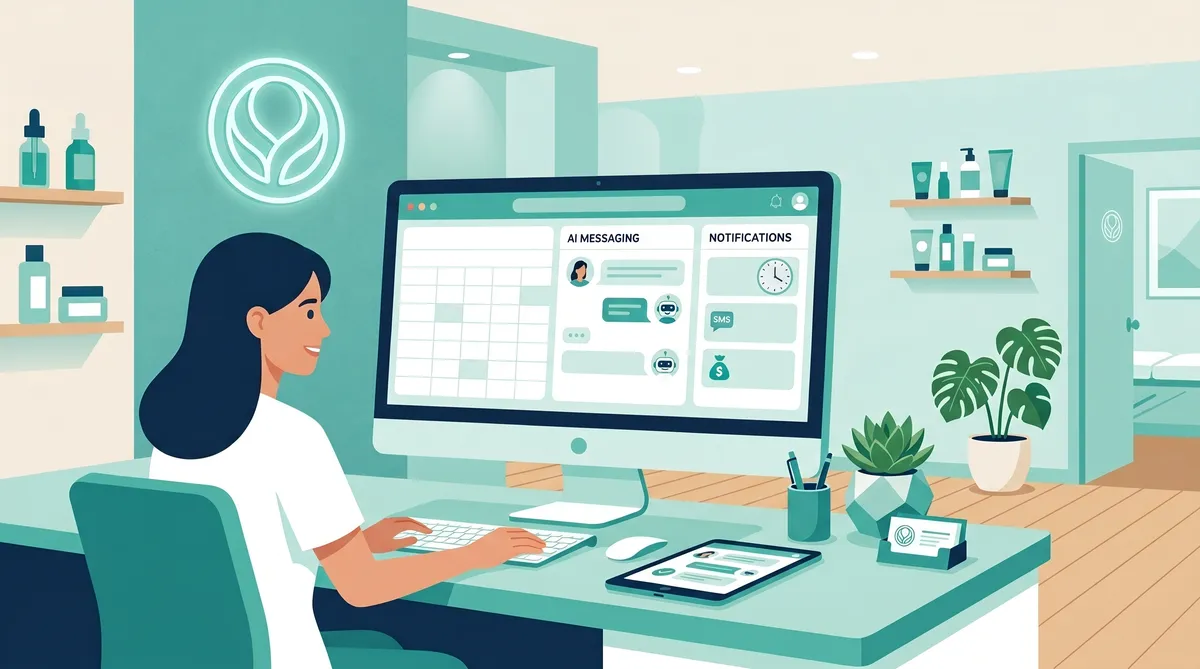
2. It books and reschedules appointments directly into your calendar. Not "someone will call you back." Not a contact form. The chatbot checks your real availability, offers time slots, and confirms the booking. The patient gets a confirmation. Your schedule updates. No human needed for routine bookings.
3. It captures and nurtures leads you'd otherwise lose. When someone isn't ready to book, the chatbot collects their name, contact info, and what they're interested in. It can send follow-up reminders, promote specials, and request reviews after visits. This is where the real revenue lift comes from: the leads that would have ghosted are now in your pipeline.
The Deal-Breakers That Make Owners Regret Their Purchase
Robotic, generic tone. If your chatbot sounds like a 2015 phone tree, patients will bail. Med spa patients especially expect a warm, aspirational tone. Dental patients expect reassurance and clarity. A chatbot that sounds like neither will hurt your brand.
Wrong answers. A chatbot that confidently tells a patient you accept an insurance plan you don't, or quotes the wrong price for a service, creates a worse experience than no chatbot at all. Accuracy is non-negotiable.
No integration with your scheduler or CRM. If the chatbot can't actually book into your system (whether that's Vagaro, Mindbody, Dentrix, Eaglesoft, Open Dental, or whatever you use), it's just a fancy contact form. Patients will abandon the conversation when they realize they still have to call.
Too hard for your staff to manage. If updating a FAQ answer or adding a new service requires a developer or a 45-minute training session, your team won't maintain it. The chatbot's answers will drift out of date within weeks, and you'll be back to square one.
Chatbot Playbook for Med Spas
Here's how an AI chatbot works in a real med spa, mapped to the situations your front desk handles every day.
After-Hours Lead Capture
What the patient asks: "Hi, I'm interested in lip filler. Do you have any availability this week?" What the bot says: "Thanks for reaching out! We'd love to help you with lip filler. We have openings on Wednesday at 2 PM and Thursday at 10 AM this week. Would either of those work for a complimentary consultation? I'll just need your name and phone number to hold the spot." What happens in the system: Bot checks real-time availability, creates the appointment in your scheduler, sends a confirmation text to the patient, and tags the lead as "lip filler, new patient" in your CRM.
This interaction happens at 9:47 PM on a Tuesday. Without a chatbot, that lead sees your contact form, maybe fills it out, and you respond 14 hours later when your front desk opens. By then, she's already booked with the med spa down the street that had a chatbot or a faster response.
Promo Campaign Follow-Through
What the patient asks: "I saw your post about 20% off CoolSculpting this month. Is that still available?" What the bot says: "Yes! Our CoolSculpting special is running through the end of this month. It's 20% off for new treatment areas. Want me to book you a free consultation so we can build a custom plan? We have openings this week." What happens in the system: Bot books the consultation, tags the lead as "CoolSculpting promo, March 2026," and notifies your aesthetician or treatment coordinator.
Membership Upsell
What the patient asks: "I get Botox every few months. Do you have any kind of membership or package?" What the bot says: "We do! Our VIP membership includes priority booking, 15% off all injectables, and a complimentary facial each quarter. I can have our membership coordinator reach out with full details. Want me to set that up?" What happens in the system: Bot captures the lead, tags them as "membership interest," and creates a task for your coordinator to follow up within 24 hours.
Pre-Consultation Screening
What the patient asks: "I want to get rid of my double chin. What do you recommend?" What the bot says: "Great question! We offer a few options for chin contouring, including Kybella and CoolSculpting. The best fit depends on your goals and anatomy. I can book you a complimentary consultation with one of our providers who specializes in facial contouring. Would you prefer an in-person or virtual consult?" What happens in the system: Bot books the consult, notes the patient's area of concern, and sends a pre-consultation form via text or email.
No-Show Reduction
What happens: Patient has a consultation booked for tomorrow at 3 PM. The chatbot sends an automated reminder at 24 hours and again at 2 hours before the appointment. If the patient replies "I need to reschedule," the bot offers alternative times immediately instead of leaving it for your front desk to chase down.
Chatbot Playbook for Dental Clinics
Different patients, different questions, same principle: respond fast, book accurately, and don't make your front desk do work a bot can handle.
New Patient Intake
What the patient asks: "I'm looking for a new dentist. Do you accept Blue Cross Blue Shield?" What the bot says: "Welcome! Yes, we accept Blue Cross Blue Shield PPO plans. We'd love to get you scheduled for your first visit. Our new patient appointments include a comprehensive exam, X-rays, and a cleaning. We have openings next Tuesday at 9 AM and Wednesday at 3 PM. Which works better for you?" What happens in the system: Bot verifies insurance is in the accepted list, books the appointment, sends new patient paperwork forms digitally, and tags the patient as "new patient, BCBS."
Insurance and Coverage FAQs
What the patient asks: "How much is a crown with Aetna?" What the bot says: "Great question. Crown costs vary depending on the type and your specific Aetna plan. Most of our patients with Aetna PPO see out-of-pocket costs between $200 and $500 after insurance. For an exact estimate, we can run a pre-authorization once you're in the system. Want me to book a quick exam so we can get you an accurate number?" What happens in the system: Bot books the appointment and flags it as "crown estimate needed" for the billing coordinator.
Emergency Triage
What the patient asks: "I chipped my tooth and it's really hurting. Can I come in today?" What the bot says: "I'm sorry to hear that! We keep same-day slots open for situations like this. Let me check what's available today. We have an opening at 2:30 PM. Can I book that for you? In the meantime, you can take over-the-counter ibuprofen for the pain and avoid chewing on that side." What happens in the system: Bot books the emergency slot, alerts the front desk and the dentist on duty, and tags the appointment as "emergency, chipped tooth."
Note: The bot does not diagnose, prescribe, or give clinical recommendations. It triages and books. The line between helpful and liability is clear, and a good chatbot respects it.
Recall and Reactivation
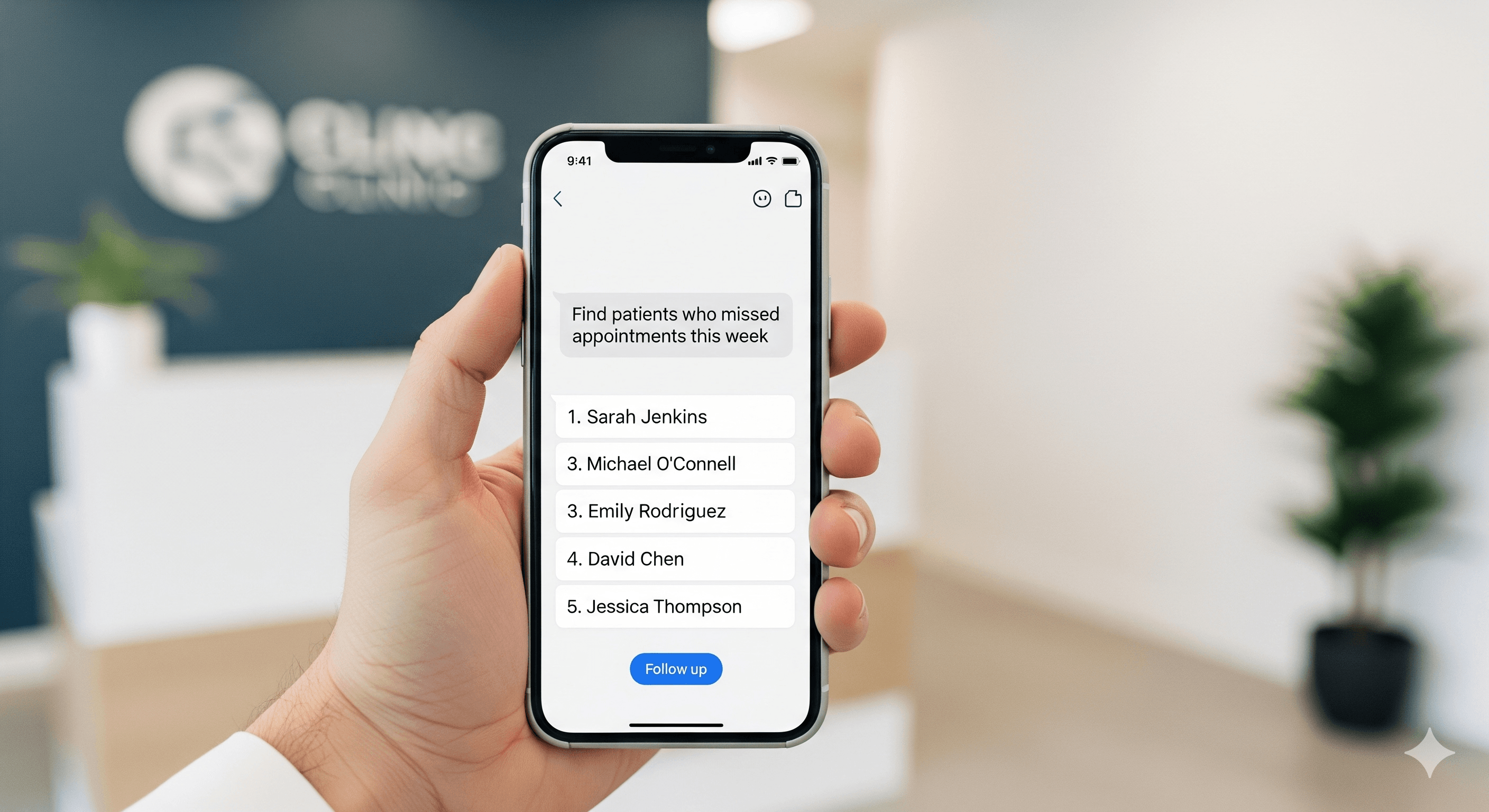
What happens: Patient hasn't been in for a cleaning in 8 months. The chatbot sends a personalized text: "Hi Sarah, it's been a while since your last visit at [Practice Name]. We'd love to get you back on the schedule. We have openings next week. Want me to book your cleaning?" If Sarah replies, the bot handles the scheduling. If she doesn't, a follow-up goes out in 2 weeks.
This alone can recover 5 to 15 patients per month who would have otherwise lapsed, at zero staff effort.
Real Numbers: What Practices Are Actually Seeing
Forum posts and case studies consistently show similar patterns. Here are representative results from practices that implemented AI chatbots.
Med Spa Example
A single-location med spa in the Southwest implemented an AI chatbot across their website, SMS, and Instagram DM. In the first 30 days:
14 new leads captured after hours that would have been missed
3 consultations booked directly by the chatbot without staff involvement
1 high-ticket treatment ($4,200 CoolSculpting package) closed from an after-hours lead
Front desk reported saving roughly 8 hours per week on FAQ calls and scheduling
Dental Clinic Example
A two-location dental practice integrated a chatbot with their practice management system. Over the first 60 days:
47 new patient appointments booked by the chatbot
Call volume to the front desk dropped 34%
Insurance-related calls (the biggest time sink) dropped 52%
11 lapsed patients reactivated through automated recall messages
Staff estimated 15+ hours per week saved across both locations
Before vs. After: Key Metrics
Metric | Before Chatbot | After Chatbot | Change |
After-hours leads captured per month | 2-4 (contact form only) | 15-25 | +400% to +500% |
Average response time to new inquiry | 12-18 hours | Under 30 seconds | -99% |
Front desk hours on FAQ calls per week | 12-20 hours | 4-6 hours | -60% to -70% |
Monthly no-shows | 15-20 | 8-12 | -35% to -45% |
New patient bookings from website | 8-12/month | 20-30/month | +100% to +150% |
Cost per interaction (vs. staff phone call) | $6-14 | $1-2 | -75% to -85% |
The math is straightforward. If your chatbot costs $250 per month and books even 3 additional patients who each generate $500 to $2,000 in revenue, the ROI is 6x to 24x. Most practices break even in the first month.
How to Set Up Your Chatbot (Plain-Language Steps)
You don't need a developer. You don't need to "build" anything from scratch. Here's what the implementation actually looks like.
Step 1: List Your Top 20 FAQs and Front-Desk Scripts
Sit with your front desk for 30 minutes. Write down every question they answer repeatedly. Pricing, insurance, services, hours, parking, pre-appointment instructions, post-treatment care, cancellation policy. These become the chatbot's knowledge base. Most practices can get to 80% coverage with 15 to 25 questions.
Step 2: Decide What the Bot Is Allowed to Do
Define the boundaries clearly. Most practices start with: book and reschedule appointments, answer FAQs, capture leads (name, phone, email, service interest), send appointment reminders and follow-ups. Then decide what the bot should never do: give medical or clinical advice, quote exact prices without disclaimers, handle billing disputes, and respond to emergencies without flagging a human.
Step 3: Connect It to Your Booking System and Communication Channels
The chatbot needs to plug into your scheduler (Vagaro, Mindbody, Boulevard, Dentrix, Eaglesoft, Open Dental, or whatever you run) so it can check real availability and create real bookings. Then deploy it where your patients actually message you: website widget, SMS/text, Instagram DM, Facebook Messenger, WhatsApp, and Google Business Messages.
Step 4: Set Guardrails and Human Handoff Rules
This is the step most practices skip and regret. Define exactly when the chatbot should stop trying and hand the conversation to a human. Common triggers: patient expresses frustration or dissatisfaction, clinical questions beyond basic info, billing disputes or complex insurance issues, any situation involving a complaint. When a handoff happens, the chatbot should send the full conversation transcript to your staff so the patient doesn't have to repeat themselves.
Step 5: Monitor, Adjust, and Expand
For the first 2 weeks, have someone review every chatbot conversation daily. You'll spot wrong answers, missed handoffs, and awkward phrasing fast. Fix them immediately. After 30 days, you should be reviewing weekly. After 90 days, you're mostly on maintenance. This is where most of the ongoing value comes from: tuning the chatbot based on real patient interactions so it gets better over time.
Med Spa vs. Dental: Compliance, Tone, and Guardrails
Getting the chatbot's personality and boundaries right is different for each practice type. Here's how they compare.
Aspect | Med Spa | Dental Clinic |
Patient mindset | Elective, emotionally driven, comparison shopping | Necessary care, often anxious, insurance-focused |
Sensitivity | Cosmetic expectations, body image, price sensitivity | Medical risk, pain, insurance coverage, emergencies |
Must-avoid territory | Promising specific results, giving medical advice, making claims about outcomes | Diagnosing conditions, prescribing treatment, clinical recommendations |
Ideal chatbot tone | Warm, aspirational, confident but not pushy. Think luxury concierge. | Reassuring, clear, professional, family-friendly. Think trusted advisor. |
Key compliance note | FTC rules on testimonials and before/after claims. State medical board advertising rules. | HIPAA for all patient data. State dental board advertising restrictions. |
Biggest risk if bot gets it wrong | Patient shows up with unrealistic expectations, demands a refund | Patient delays needed care because bot minimized urgency |
The core rule for both: the chatbot informs and schedules. It never diagnoses, prescribes, or promises.
Common Mistakes Owners Wish They'd Avoided
These come directly from practice owners in forums who learned the hard way.
Launching without training the bot on your specific practice. Generic chatbots that haven't been loaded with your FAQs, pricing, services, and policies will give wrong answers on day one. One dental practice owner reported their chatbot told a patient they accepted an insurance plan they'd dropped six months earlier. That's worse than no chatbot at all.
Not monitoring conversations in the first two weeks. The chatbot will make mistakes early. If nobody's reviewing the transcripts, wrong answers and missed handoffs pile up before you catch them. Two weeks of daily review saves months of patient frustration.
Over-automating outreach. Sending 5 texts in 3 days because the bot is "nurturing a lead" will get you blocked and reported as spam. Patients want helpful, timely follow-ups, not a barrage. Set conservative frequency limits (one reminder per appointment, one follow-up per inquiry, one recall message per month max) and adjust based on response rates.
Picking a tool that's too complex for your team. If your front desk manager can't update a FAQ answer or add a new service in under 5 minutes, the chatbot will rot. Simplicity of management matters as much as capabilities. This is where all-in-one platforms like Podium often frustrate smaller practices: the tool can do 50 things, but you only need 5, and the other 45 make it confusing and expensive.
Frequently Asked Questions
How much does an AI chatbot cost for a med spa or dental clinic? Most purpose-built chatbots for private practices run $99 to $499 per month depending on features, channels, and patient volume. All-in-one platforms like Podium typically start at $300+ per month with annual contracts. The right comparison isn't chatbot cost vs. zero; it's chatbot cost vs. the revenue from patients you're currently losing to slow responses.
Is a dental or med spa chatbot HIPAA compliant? Any chatbot handling patient data (names, contact info, health questions, appointment details) must be HIPAA compliant. This means encrypted data transmission, secure storage, business associate agreements (BAAs) with your practice, and no storing protected health information in unsecured channels. Always ask your chatbot vendor for their BAA before you sign.
Can a chatbot replace my receptionist? No, and it shouldn't try to. A chatbot handles the repetitive, high-volume tasks (FAQs, basic scheduling, lead capture, reminders) so your receptionist can focus on the work that requires a human: complex patient needs, in-office experience, billing issues, and relationship building. Think of it as a force multiplier, not a replacement.
How long does it take to set up a chatbot for my practice? Most practices can go from zero to live in 1 to 2 weeks. The biggest time investment is on your end: gathering your FAQs, defining your booking rules, and connecting your scheduler. The chatbot vendor handles the technical setup. Expect to spend 2 to 4 hours of your staff's time during onboarding.
What if the chatbot gives a patient wrong information? This is why the monitoring period matters. A well-configured chatbot with proper guardrails will escalate questions it's unsure about to a human rather than guessing. During your first 2 weeks, review every conversation daily. After that, spot-check weekly. Most chatbots also let you update answers instantly when you catch an error, so the same mistake doesn't happen twice.
Your Next Step
Here's what we'd suggest instead of a generic demo request.
Send us your top 20 FAQs and your booking link. That's it. Within 24 hours, we'll send you back a draft chatbot flow showing exactly how the bot would handle your most common patient questions, book appointments into your actual schedule, and capture leads you're currently missing after hours.
No contract. No credit card. Just a working draft so you can see what this looks like for your specific practice before you commit to anything.
Whether you work with Mentera or someone else, getting these fundamentals right is what separates chatbots that book patients from chatbots that collect dust.
Ready to see what this looks like for your practice? [Send us your FAQs and booking link → https://www.mentera.ai/demo]
Mentera builds AI-powered patient communication tools for med spas, dental clinics, and private practices. We help you capture more leads, book more patients, and give your front desk their time back, without the complexity or cost of enterprise platforms. Learn more at mentera.ai.