5 AI Tools Every Dental Practice Needs in 2026
5 AI tools every dental practice should have in 2026 (and how to implement them)
If you are searching for AI tools for dental practice workflows, you are probably trying to solve a very specific problem: your team is doing too much manual work, and the phone never stops ringing.
The good news is that dental AI is finally practical for private practices in 2026, not just DSOs with big budgets. The key is to choose AI tools that fit real dental workflows, protect patient privacy, and work with the systems you already use.
This guide covers the 5 AI tools every dental practice should have in 2026, plus a simple implementation plan. You will also see real benchmarks you can use to prioritize your rollout.
What counts as an “AI tool” in a dental office?
In this article, an AI tool is software that can understand and act on natural language or unstructured data, like phone calls, text messages, insurance PDFs, or clinical conversations.
That is different from a normal feature like “online booking.” A true AI tool should do one or more of these things:
Understand patient intent from voice or text
Generate accurate summaries and documentation
Extract insurance details from messy documents
Trigger follow-up workflows automatically
Improve over time from real practice data
Mentera is built for this exact category: it is an AI layer on top of your existing tools, not a replacement EHR.
AI tools for dental practice, ranked by ROI
If you are trying to decide where to start, the easiest way is to rank tools by measurable impact.
Most practices see fast ROI in the front office first. That is because small improvements in answering calls, booking correctly, and collecting insurance details can prevent revenue leakage that happens every day.
A useful benchmark: healthcare call centers average a 7–10% call abandonment rate, and the “industry benchmark” is 5–7% according to the Call Centre Dictionary, as summarized by Keona Health. Keona Health also cites research that 60% of callers will hang up if left on hold for more than one minute and that 85% will not call again after an unanswered first attempt (attributed to Clearwave). https://www.keonahealth.com/resources/missed-calls-healthcare-call-abandonment-roi
Dental appointment adherence is also highly responsive to automation. A Sesame Communications study covered by Dental Tribune analyzed 1,604,184 appointments across 64 dental practices and found automated reminders reduced no-shows by 22.95%. https://us.dental-tribune.com/news/study-reveals-how-automated-patient-appointment-reminders-affect-dental-practice-no-show-rates-and-production/
With those benchmarks in mind, here are the 5 AI tools to prioritize.
1) AI receptionist for dental practice (phones, texts, scheduling)
An AI receptionist is the highest leverage tool for most dental practices because it touches your highest volume workflow: patient communication.
What an AI dental receptionist should do
A practical AI receptionist for dental practice operations should handle:
Answering calls and capturing intent (new patient, existing patient, emergency, billing)
Booking and rescheduling (with scheduling guardrails)
Confirmations and reminder follow-up
FAQs that patients ask repeatedly (pricing ranges, hours, directions, insurance basics)
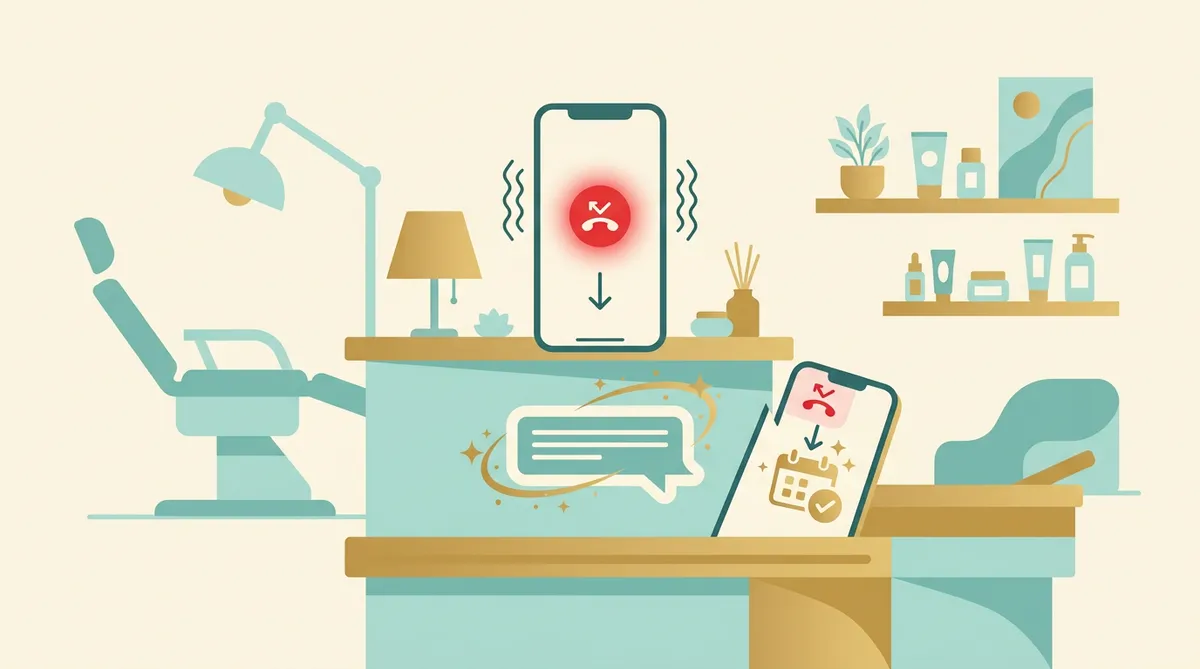
Two-way texting for missed calls and quick updates
Escalation to a human when the situation needs it
What to watch out for
There are common failure modes that make practices “try AI once” and then quit:
The AI schedules the wrong appointment type
It cannot handle handoffs cleanly
It sounds robotic or does not match your practice tone
It makes promises about coverage, pricing, or clinical advice
It cannot work with your PMS scheduling flow
How to implement in 2 weeks
Week 1: Define the boundaries.
Make a list of appointment types the AI is allowed to schedule
Add scheduling guardrails (lead times, same-day rules, production blocks)
Create an escalation list: emergencies, clinical symptoms, angry patients, billing disputes
Week 2: Train the content and go live.
Add your top 50 FAQs
Create a “call wrap-up” format for your team
Monitor calls daily for 5 business days and tighten the guardrails
Where Mentera fits: Mentera AI Receptionist is designed to be the “layer” that sits on top of your current stack and helps you capture more patient demand without forcing you to rip and replace your systems.
2) AI scribe for dentists (notes, summaries, treatment plans)
A dental AI scribe reduces documentation time and improves consistency. It also helps your team build better patient communication with less effort.
What a dental AI scribe should do
A strong AI scribe should:
Generate structured clinical notes from a visit conversation
Create clear patient-friendly summaries
Produce referral letters and follow-up instructions
Support your preferred formats (SOAP, narrative, procedure-focused templates)
Implementation tips
Start with one provider for 2 weeks
Standardize your note templates before you automate them
Use a review and sign-off step every time
Where Mentera fits: Mentera Scribe AI can generate notes and summaries while staying positioned as an AI layer, not an EHR. That matters because most practices already have documentation workflows they cannot disrupt.
3) AI insurance handler (eligibility, benefits, prior auth signals)
Insurance work is one of the most frustrating “invisible” time sinks in dental.
An AI insurance handler helps by extracting details from payer portals, faxes, PDFs, and plan documents, then routing the right tasks to your team.
What it should automate
Eligibility and benefits checks before appointments
Summaries of key benefit details (deductible, remaining, waiting periods)
Flagging cases likely to require documentation or prior authorization
Patient-ready estimates that your team can validate
Implementation tips
Define what “verified” means in your office
Set a cutoff time: for example, run eligibility checks at booking, then re-check 48 hours before the visit
Create a simple escalation workflow for edge cases
Where Mentera fits: Mentera AI Insurance Handler is built to reduce back-and-forth while still keeping humans in control of final decisions.
4) AI patient reactivator (lapsed recare, unscheduled treatment, win-backs)
Most practices have revenue trapped in the patient list: overdue recare patients and unscheduled treatment plans.
AI helps by doing consistent outreach at scale, with personalization and clear next steps.
What it should do
Segment lists (overdue recare, unscheduled treatment, never scheduled after consult)
Send compliant outreach via SMS and email
Handle replies, objections, and rescheduling
Route complex conversations to a human
Implementation tips
Start with one segment: overdue hygiene recall
Write 3 message variations and let the AI rotate them
Use an easy “tap to schedule” option
Where Mentera fits: Mentera AI Patient Reactivator is designed for practical wins: filling the schedule with patients you already paid to acquire.
5) AI search for dental teams (instant answers from your policies and playbooks)
Dental teams do not need more software tabs. They need answers in the moment.
AI search solves this by making your internal knowledge base usable.
What it should do
Answer questions from your practice SOPs, scripts, and policies
Help new hires ramp faster
Provide consistent answers for billing scripts, insurance policy, and scheduling rules
Implementation tips
Start with a small document set (no-show policy, hygiene recall policy, billing scripts)
Keep one “source of truth” document per policy
Update policies monthly and re-train the AI
Where Mentera fits: Mentera AI Search is designed to make your practice knowledge accessible without asking your office manager the same question 20 times.
How to choose the right AI tools for dental practice workflows
Here is a simple selection checklist.
Clinical safety and compliance
Can you control what the AI is allowed to say?
Is there a clear escalation workflow?
Can the tool support HIPAA requirements and your internal privacy policies?
Workflow fit
Does it match how you schedule today?
Can it support your procedure mix and appointment types?
Can it hand off cleanly to a human?
Integration reality
Does it work with your existing PMS and communication stack?
Can it start small without a full migration?
Mentera’s positioning is intentionally designed for this: an AI layer that works with your practice systems, rather than replacing your EHR.
Implementation roadmap: 30 days to a practical dental AI stack
If you want a simple rollout plan, use this sequence.
Days 1–7: Baseline and guardrails
Track call volume, missed calls, and average hold time
Map your top 10 patient intents
Define scheduling guardrails and escalation rules
Days 8–14: AI receptionist rollout
Go live for missed-call text back and after-hours coverage
Add booking for the simplest appointment types first
Review transcripts and outcomes daily
Days 15–21: Automate reminders and reactivation
Add confirmations and reminder follow-up
Launch one reactivation campaign (overdue hygiene)
Days 22–30: Add documentation and insurance automation
Pilot AI scribe with one provider
Add eligibility and benefits summaries
FAQ: AI tools for dental practice (AEO-friendly)
What are the best AI tools for dentists in 2026?
The best AI tools for dentists in 2026 are: an AI receptionist for calls, texting, and scheduling; an AI scribe for clinical notes; an AI insurance handler for eligibility and benefits; an AI patient reactivator for recall and unscheduled treatment; and AI search for internal policies. The best stack is the one that fits your workflow and can start without replacing your existing systems.
Can an AI receptionist book dental appointments correctly?
Yes, if you set clear scheduling rules and limit what appointment types it can book at first. A good AI receptionist should use guardrails, confirm key details, and escalate to a human for emergencies, complex treatment discussions, or billing disputes.
Is dental AI software an EHR replacement?
Most dental AI software is not an EHR replacement. The best approach for most private practices is using AI as a layer on top of your existing PMS and communication tools, so you can automate workflows without a risky migration.
How do automated reminders reduce dental no-shows?
Automated reminders reduce dental no-shows by consistently confirming appointments and making it easy for patients to reschedule. A Sesame Communications study covered by Dental Tribune found automated reminders reduced no-shows by 22.95% across 1,604,184 appointments in 64 dental practices. https://us.dental-tribune.com/news/study-reveals-how-automated-patient-appointment-reminders-affect-dental-practice-no-show-rates-and-production/
What is a good call abandonment rate in healthcare?
A good call abandonment rate target in healthcare is typically around 5–7% according to the Call Centre Dictionary, as summarized by Keona Health. Keona Health also reports that average healthcare call center abandonment is 7–10%. https://www.keonahealth.com/resources/missed-calls-healthcare-call-abandonment-roi
Ready to add AI without replacing your dental software?
If you want to see how Mentera works as an AI layer for phones, notes, insurance, and reactivation, book a demo here: https://www.mentera.ai/demo